Patios
What good patio base prep looks like (and why it costs what it costs).
A patio is only as good as the base under it. Here is exactly what we put down, why, and how to spot a corner-cutting install.
January 19, 2026 / 6 min read
Pavers and stone do not fail. Bases fail. If you ever see a patio settling, pooling water, or popping joints, the problem is almost always under the surface.
Good base prep is dull, slow, and expensive. It is also the thing that decides whether your patio looks the same in ten years.
Excavate to depth.
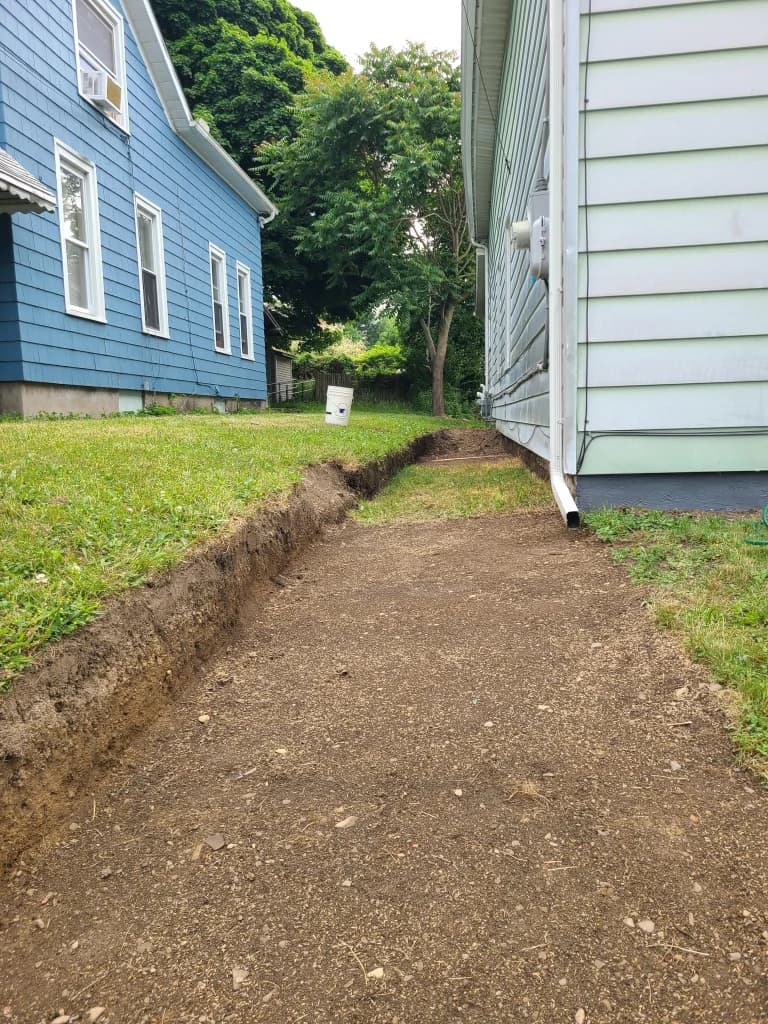
We dig deep enough to install a real base, not just enough to fit pavers. For a pedestrian patio that means six to eight inches below finished grade. Driveways need more. Shortcutting this step is the single most common reason a patio settles.
Geotextile and compacted aggregate.
We lay a woven geotextile fabric to separate native soil from base material. Then we install compacted aggregate in two-inch lifts, compacted between each. The math is boring: you cannot replace compaction with extra material.
Bedding, edge restraint, polymeric joints.
A screeded bedding layer sits on the compacted base. Pavers are set and cut, then locked in with rigid edge restraint. Polymeric jointing is swept in and activated with water. That is what keeps weeds out and the surface stable through freeze-thaw cycles.
How to spot a corner-cut install.
Edge restraint should be invisible after install, never a thick visible plastic lip. Joints should be tight and consistent. The surface should be flat enough to roll a ball across without it stopping. Cuts should land where they look intentional, not where the installer ran out of patience.